
The Growing Importance of CNC Skill Development in India’s Manufacturing Industry
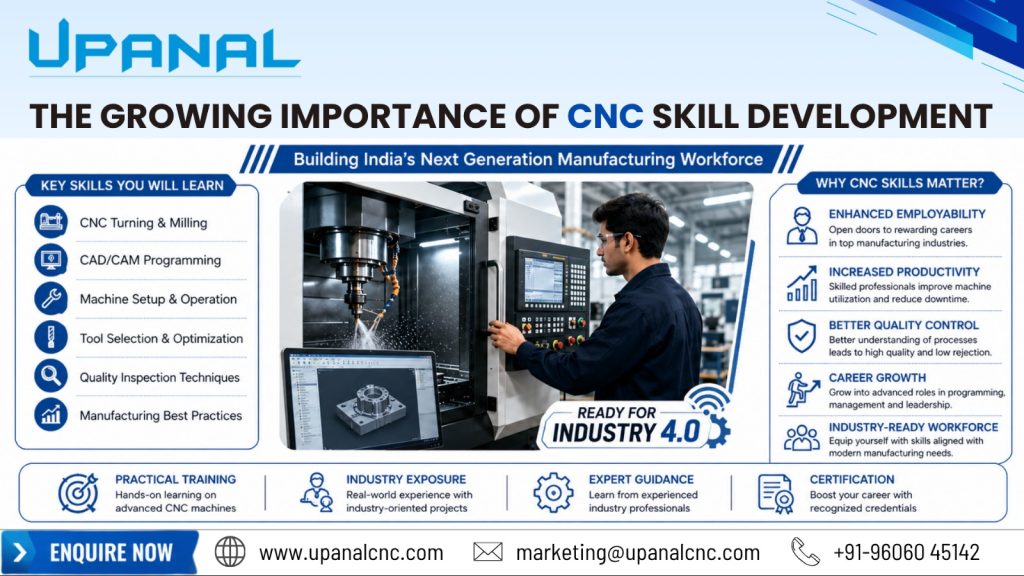
India’s manufacturing sector is witnessing rapid growth driven by automation, precision engineering, and advanced manufacturing technologies. As industries continue to adopt modern CNC machines and Industry 4.0 practices, the demand for skilled CNC professionals has never been higher.
Why CNC Skills Matter
Computer Numerical Control (CNC) technology has transformed the manufacturing landscape by enabling high-precision machining, improved productivity, and consistent quality. Industries such as aerospace, automotive, medical devices, defense, and general engineering rely heavily on CNC machining for their production requirements.
However, advanced machinery alone cannot ensure success. Skilled technicians, programmers, and engineers are essential to maximize machine performance and maintain production efficiency.
Bridging the Industry Skill Gap
One of the major challenges faced by manufacturers today is the shortage of trained CNC professionals. Many companies struggle to find candidates with practical knowledge of machine operation, programming, tooling, and process optimization.
Industry-oriented training programs play a crucial role in bridging this gap by providing hands-on exposure to:
- CNC Turning
- CNC Milling
- CAD/CAM Programming
- Machine Setup and Operation
- Tool Selection and Optimization
- Quality Inspection Techniques
- Manufacturing Best Practices
Benefits of Professional CNC Training
Enhanced Employability
Candidates with practical CNC knowledge have greater opportunities in manufacturing industries and can secure rewarding careers.
Increased Productivity
Well-trained operators and programmers help organizations improve machine utilization and reduce production downtime.
Better Quality Control
Understanding machining processes and inspection methods leads to improved product quality and reduced rejection rates.
Career Growth
Continuous learning enables professionals to advance into supervisory, programming, and production management roles.
The Future of Manufacturing
As India moves toward becoming a global manufacturing hub, the need for technically skilled manpower will continue to rise. Investing in CNC skill development not only benefits individuals but also strengthens the entire manufacturing ecosystem.
Training institutions and industry partners must work together to create a workforce that is ready for the challenges and opportunities of modern manufacturing.
Conclusion
The future of manufacturing depends on skilled professionals who can effectively operate, program, and optimize advanced CNC technologies. By focusing on practical training and industry-relevant education, organizations can build a strong talent pipeline that supports innovation, productivity, and sustainable growth.
At Upanal Education, we are committed to developing the next generation of manufacturing professionals through hands-on CNC training, industry exposure, and practical learning experiences.