
The Importance of Machine Foundation and Leveling in CNC Installation
Introduction
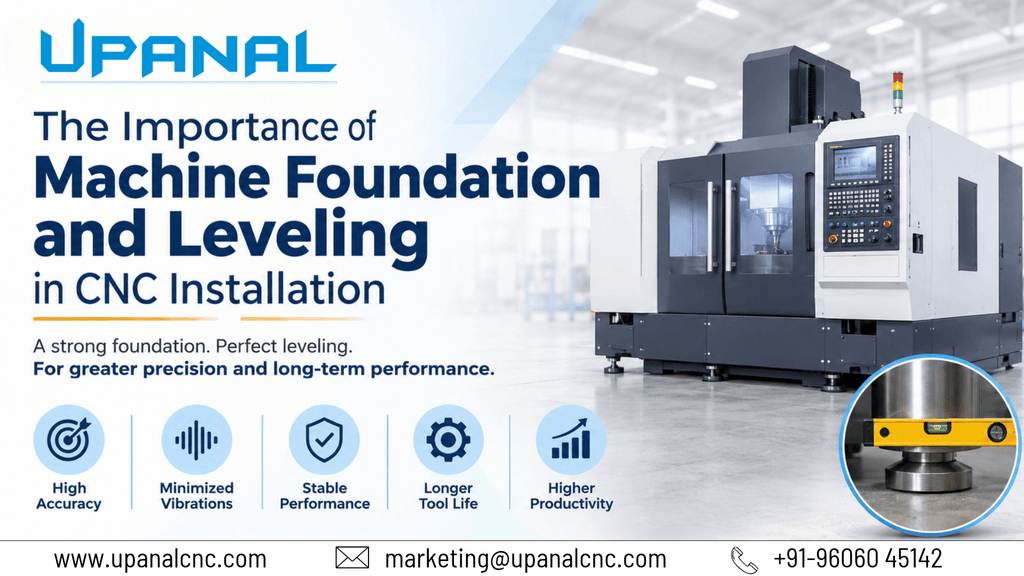
Installing a CNC machine is not just about positioning the equipment and connecting electrical power. A strong foundation and accurate machine leveling are equally important to ensure long-term performance, machining accuracy and operational stability.
Even a high-performance CNC machine can experience vibration, dimensional inaccuracies and premature component wear if the foundation is not properly designed or the machine is incorrectly leveled.
At UPANAL CNC, we understand that proper machine installation plays a vital role in achieving consistent machining quality and reliable production performance.
1. Why Is Machine Foundation Important?
A CNC machine foundation provides the structural support required to handle the machine’s weight, operating forces and vibrations generated during machining.
A properly designed foundation helps:
- Support the machine’s overall weight.
- Minimize vibrations during machining operations.
- Maintain machine stability during high-speed operations.
- Reduce the impact of external floor vibrations.
- Maintain long-term geometric accuracy.
- Improve machining consistency and surface finish.
For heavy-duty machines such as Horizontal Machining Centers (HMC), Vertical Turning Lathes (VTL) and Double Column Machining Centers, foundation planning becomes particularly important.
2. How Does Improper Foundation Affect CNC Machine Performance?
An inadequate foundation can create several problems that directly affect production quality.
Machine Vibration
An unstable foundation can increase vibrations during machining, affecting cutting performance, tool life and surface finish.
Dimensional Inaccuracy
Foundation settlement or uneven support can affect machine geometry, resulting in dimensional variations in finished components.
Increased Tool Wear
Excessive vibration can increase cutting tool wear and reduce tool life, resulting in higher operating costs.
Machine Component Damage
Continuous vibration and uneven loading may affect sensitive machine components, including bearings, guideways and spindle assemblies.
Reduced Production Efficiency
Frequent adjustments, machining errors and quality issues can increase downtime and reduce overall productivity.
3. Importance of Proper CNC Machine Leveling
Machine leveling is the process of adjusting a CNC machine to achieve the required geometric alignment using precision leveling instruments.
Proper leveling ensures that the machine is correctly supported and helps maintain its intended geometric accuracy.
Key benefits include:
- Improved machining precision.
- Consistent component dimensions.
- Better spindle and axis alignment.
- Reduced mechanical stress.
- Improved surface finish.
- Reliable long-term machine performance.
Machine leveling should be performed according to the manufacturer’s installation specifications and tolerances.
4. Key Factors to Consider Before Installing a CNC Machine
Before installing a CNC machine, manufacturers should evaluate the following factors:
Floor Load-Bearing Capacity
The factory floor must be capable of supporting the machine’s total weight along with operating loads and any additional foundation requirements.
Foundation Design
Foundation requirements depend on machine size, weight, configuration and operating conditions. Some machines may require reinforced concrete foundations, while others may be installed on appropriately designed industrial floors.
Vibration Isolation
External vibrations from nearby machines, compressors and other industrial equipment should be considered during installation planning.
Foundation Curing
When a new concrete foundation is required, adequate curing time must be provided according to the foundation design and engineering specifications before machine installation.
Environmental Conditions
Temperature variations, humidity and nearby sources of vibration can influence machine performance and accuracy.
Manufacturer Specifications
Always follow the machine manufacturer’s recommendations for foundation dimensions, anchoring, leveling and installation clearances.
5. Step-by-Step CNC Machine Foundation and Leveling Process
A systematic installation process helps ensure reliable machine performance.
Step 1: Site Inspection
Evaluate the installation area, floor condition, available space, electrical connections and environmental conditions.
Step 2: Foundation Preparation
Prepare the foundation according to the machine manufacturer’s technical specifications and site requirements.
Step 3: Machine Positioning
Move the machine carefully to its designated installation location using suitable lifting and handling equipment.
Step 4: Initial Leveling
Use precision leveling instruments to check the machine’s level and make the necessary adjustments.
Step 5: Final Alignment
Verify the machine geometry and alignment according to the manufacturer’s installation procedure.
Step 6: Machine Testing
Perform machine operation checks and suitable trial machining to verify installation performance.
Step 7: Final Inspection
Complete the installation checklist and document the machine’s installation and inspection results.
6. Which CNC Machines Require Special Foundation Consideration?
Different CNC machines have different foundation and installation requirements.
- Vertical Machining Centers (VMC): Require stable support to maintain machining accuracy during milling, drilling and tapping operations.
- Horizontal Machining Centers (HMC): Require careful consideration of machine weight, structural support and operating vibrations.
- Vertical Turning Lathes (VTL): Require appropriate foundation design to support heavy workpieces and machining forces.
- Double Column Machining Centers: Require proper structural support due to their large size and heavy-duty machining applications.
- 5-Axis CNC Machines: Require careful installation and geometric alignment to achieve the required precision in complex machining operations.
The exact foundation requirements must always be confirmed with the machine manufacturer.
7. Best Practices for Long-Term Machine Stability
Proper installation is only the first step. Maintaining machine stability over time is equally important.
Consider these practices:
- Periodically inspect machine leveling and support conditions.
- Monitor unusual vibrations during machining.
- Maintain a clean and stable machine installation area.
- Avoid unnecessary heavy loading near the machine foundation.
- Follow the manufacturer’s recommended maintenance schedule.
- Arrange professional machine inspection whenever abnormal vibration or alignment issues are observed.
Conclusion
A strong foundation and accurate leveling are essential for achieving the best performance from any CNC machine. They directly influence machining accuracy, operational stability, tool life and overall production efficiency.
Investing in proper foundation preparation and professional installation helps manufacturers protect their CNC equipment and achieve consistent production results.
At UPANAL CNC, we provide comprehensive CNC solutions covering machine selection, installation, commissioning, service and maintenance for modern manufacturing requirements.
Looking for the right CNC machine for your manufacturing facility?
Contact UPANAL CNC for expert guidance on CNC machining and metal forming solutions.
UPANAL CNC – One Partner. Total Metal Solutions.